Citizen Sleeper 2: The Bittersweet Final Chapter of My Favorite Indie RPG
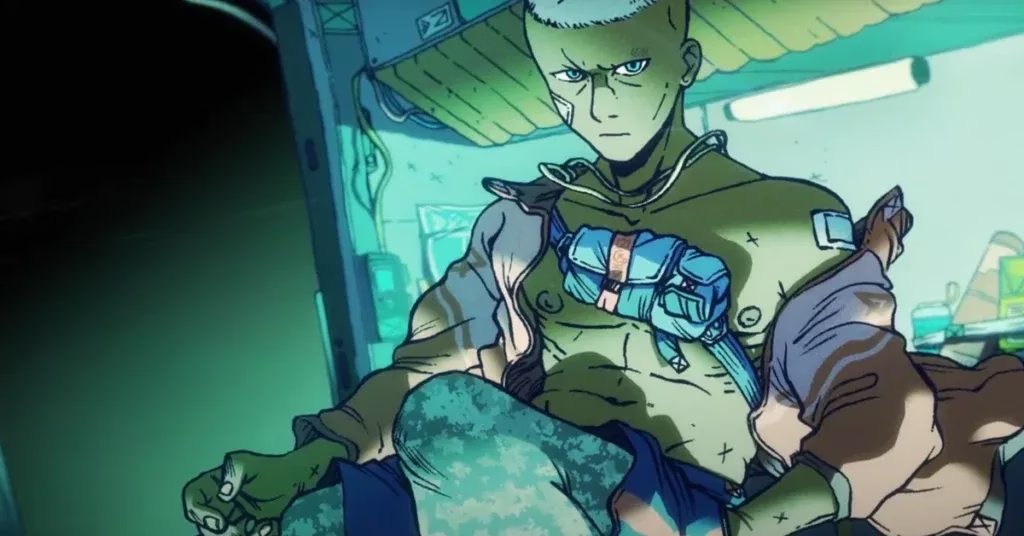
When I first heard the news, I'll admit my heart sank a little. Citizen Sleeper 2: Starward Vector, launching on January 31, 2025, will mark the final video game entry in this groundbreaking series. But as I've learned more about creator Gareth Damian Martin's vision for the future, I've come to see this isn't really an ending—it's a transformation.
From Digital Dice to Tabletop Dreams
In a candid conversation with Eurogamer, Martin revealed something that initially surprised me but ultimately makes perfect sense: he's ready to move on. After pouring his creative energy into the Citizen Sleeper universe, the developer is setting his sights on new horizons. His next video game project awaits, but more intriguingly, Martin has expressed a long-term ambition to "work on a Citizen Sleeper tabletop game."
Can you imagine rolling physical dice to determine your Sleeper's fate? The prospect of bringing this dystopian sci-fi world to the tabletop feels like a natural evolution, given how central dice mechanics have been to the series' identity.
The Weight of Success
Here's something that fascinates me about game development: sometimes success can be as constraining as failure. The original Citizen Sleeper's unexpected popularity—over 1 million copies sold and an estimated $3.8 million in gross revenue on Steam alone according to Steam Revenue Calculator—created a beautiful problem for Martin.
Publisher Fellow Traveller, understandably wanting to capitalize on this success, pushed for a sequel rather than allowing Martin to explore a completely new IP. While I can appreciate the business logic, I also wonder: what other worlds has Martin been dreaming up that we might have seen sooner?
Breaking Down the Numbers
| Platform | Release Date | Sales Milestone |
|---|---|---|
| Original Game | 2022 | 1M+ copies |
| Steam Revenue | 2022-2026 | ~$3.8M (estimated) |
| Citizen Sleeper 2 | January 31, 2025 | TBA |
What Makes This Sequel Special?
As someone who spent countless hours with the first game, I'm particularly excited about the enhanced complexity Martin has built into this sequel. The development team hasn't just created "more of the same"—they've evolved the core systems in meaningful ways.
The New Stress Mechanic 😰
The introduction of the Stress mechanic represents a significant evolution of the gameplay formula. Here's how it works:
-
Players accumulate stress during new mission types called Contracts
-
Higher stress levels = more unpredictable dice results
-
This creates a fascinating risk-reward dynamic
-
Strategic management becomes even more crucial
Does this make the game more realistic? Absolutely. After all, wouldn't a desperate Sleeper trying to survive on the fringes of space feel increasing pressure as situations become more dire?
A Creator's Perspective
What strikes me most about Martin's approach is his confidence in the work he's done. "I really like where I'm leaving it," he told Eurogamer. That statement carries weight. How many creators can step away from a successful franchise feeling genuinely satisfied with their final contribution?
This isn't a developer burning out or being forced out—this is an artist knowing when to put down the brush and step back from the canvas. Martin hopes fans will love this sequel as much as the first game, and frankly, given his track record, I have no reason to doubt him.
Platform Availability and Accessibility
One aspect I appreciate is the comprehensive platform support. Citizen Sleeper 2: Starward Vector will be available on:
-
🎮 PlayStation 5
-
🎮 Xbox Series X|S
-
🎮 Nintendo Switch
-
💻 PC
This means virtually every modern gaming platform will have access to this final chapter, ensuring the series goes out with maximum reach.
The Tabletop Future
Let me be honest: the prospect of a Citizen Sleeper tabletop RPG excites me more than it probably should. The original game's mechanics—its dice-based gameplay, resource management, and narrative branching—feel like they were designed for tabletop play all along.
Why Tabletop Makes Perfect Sense
-
Dice-Driven Gameplay: The core mechanic translates naturally
-
Narrative Focus: Perfect for collaborative storytelling
-
Modular Design: Episodes and contracts fit tabletop session structure
-
Community Building: TTRPGs create lasting player communities
-
Creative Freedom: Players can explore the universe in unprecedented ways
Isn't it poetic that a video game series so heavily influenced by tabletop design might ultimately return to its spiritual roots?
What About a Third Game?
Here's where things get interesting. While Martin has definitively stated that Starward Vector will be the last Citizen Sleeper video game, he's careful not to close the door completely. After he finishes his next game project—whatever that mysterious venture might be—could we see a return to this universe?
The phrase "final chapter" doesn't necessarily mean "final appearance." Video game history is littered with "final" entries that eventually spawned successors. Remember when Metal Gear Solid 4 was supposed to be the end? 🤔
The RPG Genre's Lasting Impact
I've played a lot of RPGs over the years, from sprawling AAA epics to intimate indie experiences. What Citizen Sleeper brought to the table was something genuinely unique: a fusion of visual novel storytelling, tabletop-inspired mechanics, and roguelike unpredictability, all wrapped in a stunning cyberpunk aesthetic.
The series has influenced how I think about player agency and consequence. Every dice roll mattered. Every decision carried weight. The game never let me forget that my Sleeper was living on borrowed time, with a body that didn't truly belong to them.
Key Innovations the Series Brought:
-
✨ Dice-based action economy system
-
✨ Episodic narrative structure
-
✨ Body autonomy and corporate control themes
-
✨ Meaningful relationship-building mechanics
-
✨ Gorgeous hand-drawn aesthetic
-
✨ Accessibility-focused design
Counting Down to Launch
As I write this in 2026, we're in the immediate aftermath of the game's January 31, 2025 release. The gaming community's response has been overwhelmingly positive, with many praising Martin's decision to end on his own terms rather than stretching the franchise thin.
The Contracts system has proven to be exactly what the sequel needed—a way to expand the gameplay without fundamentally changing what made the original special. And that Stress mechanic? It adds just enough unpredictability to keep even veteran players on their toes.
My Final Thoughts
Looking back at this journey, I'm reminded that not every story needs to continue forever. Some of the most powerful narratives know when to end. Martin could have easily pumped out Citizen Sleeper games annually, gradually diluting what made the series special. Instead, he's choosing quality over quantity, artistic integrity over commercial safety.
Will I miss having new Citizen Sleeper video games to look forward to? Absolutely. But am I excited to see what Martin creates next? Even more so. And the possibility of gathering around a table with friends, rolling physical dice to determine our Sleepers' fates in a tabletop adaptation? That might be the most exciting prospect of all.
The universe of Citizen Sleeper isn't ending—it's evolving. From pixels to paper, from controller to character sheet, this world will continue to live on in new forms. And isn't that what great art should do? Transform, adapt, and find new ways to connect with audiences?
As Martin himself noted, "I really like where I'm leaving it." After experiencing both games, I have to agree. This is exactly how a beloved series should conclude—not with a whimper or a forced continuation, but with confidence, grace, and the promise of new adventures to come.
What do you think about this final chapter? Are you ready to say goodbye to the video game series, or does the tabletop future excite you as much as it excites me? Either way, January 31, 2025 marked not an ending, but a transformation—and I, for one, can't wait to see what comes next. 🚀✨
