Code Vein: The Anime Soul That Redefined a Genre
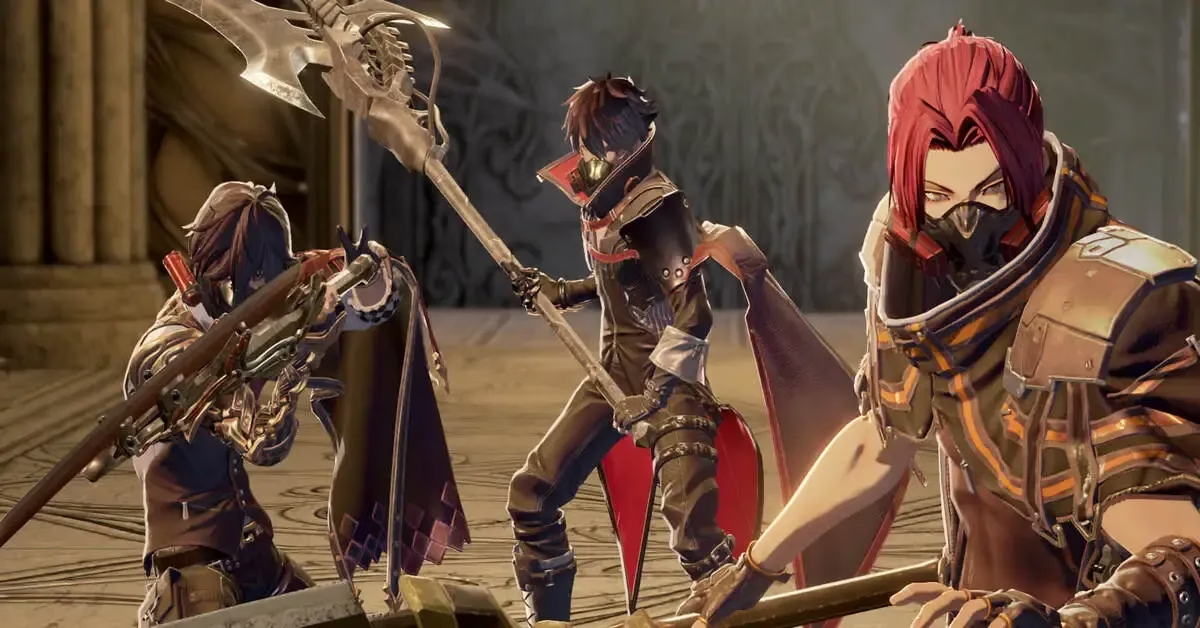
In the dimly lit ruins of a world that once thrived, a lone Revenant awakens with no memories, no identity, only an insatiable thirst for blood. This is not the typical dark fantasy hellscape that Souls-like games have become known for—this is something different, something distinctly emotional. When Code Vein emerged in September 2019, it arrived not as another Dark Souls clone but as a bold statement: Souls-like games could be accessible, narrative-driven, and visually stunning without sacrificing the core challenge that defines the genre.
The Birth of a Different Kind of Darkness
By 2019, the Souls-like market had become oversaturated. Developers everywhere were crafting punishing experiences with oppressive atmospheres, minimal storytelling, and steep learning curves that turned away as many players as they attracted. The formula had grown stale, repetitive—a never-ending parade of gray castles and grotesque monsters that all blurred together.
Code Vein's developers at Bandai Namco Studios saw an opportunity where others saw only established conventions. Rather than compete directly with FromSoftware's legacy, they chose to carve out their own territory. The result was a game that retained the challenging combat and exploration that defined the genre while wrapping it in an anime aesthetic that felt simultaneously fresh and familiar to a different audience.
The decision to embrace anime styling wasn't just cosmetic—it was philosophical. Where Dark Souls presented faceless knights in decaying armor, Code Vein offered customizable characters with expressive faces and emotional depth. The color palette, while somber, contained moments of vibrant beauty that contrasted sharply with the genre's typically monochromatic approach. This wasn't about being easier or more mainstream; it was about proving that Souls-like games could evoke different emotions beyond despair and frustration.
Combat That Rewards Courage Over Caution
The beating heart of Code Vein lies in its dynamic combat system, which encourages aggressive play rather than the defensive posturing common in traditional Souls-likes. Standing back and waiting for openings might work occasionally, but the game's design philosophy actively rewards players who take calculated risks and press their advantage.
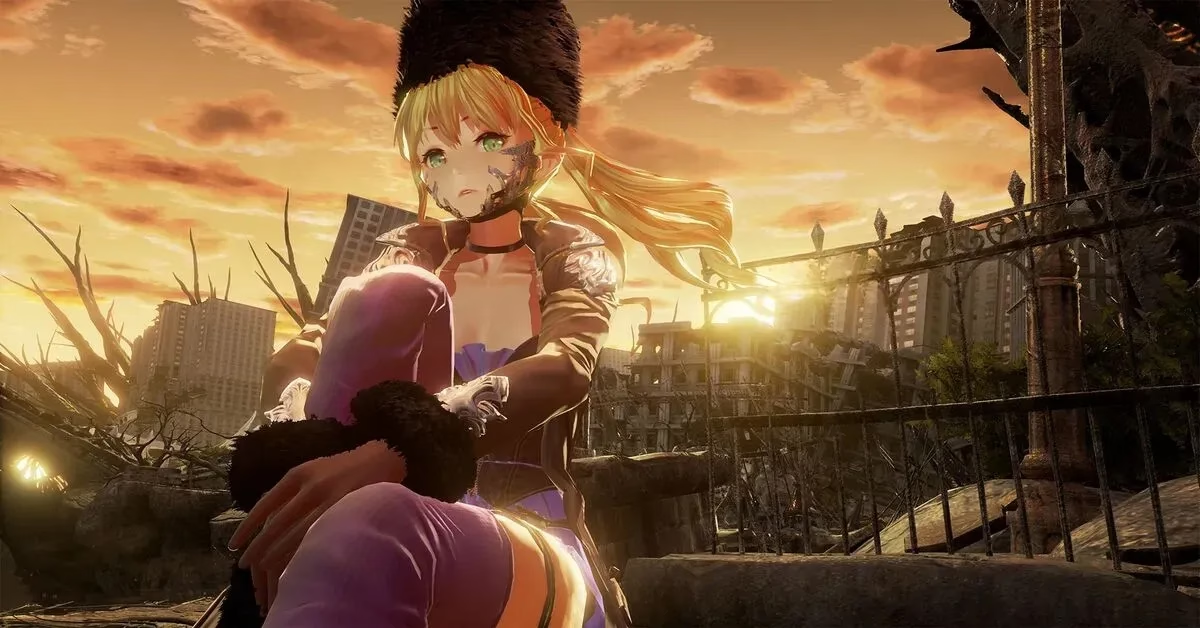
The Blood Code system represents the game's most innovative departure from genre conventions. Unlike traditional RPGs where choosing a class locks you into specific stats and abilities for an entire playthrough, Blood Codes function as flexible class systems that can be swapped at any checkpoint. Want to experiment with a magic-heavy build for one boss, then switch to a tank configuration for exploration? No problem. Made a decision you regret? Simply change your code and try again.
This flexibility extends to the game's progression system. While players still collect a soul-like currency to level up, each level increases all stats rather than forcing specialization. The real build diversity comes from combining Blood Codes with weapons, armor, and Gifts—special abilities that define your combat approach. The weapon variety is impressive:
-
One-handed swords: Fast, versatile, and reliable for most situations
-
Two-handed swords: Powerful but slower, requiring commitment to each swing
-
Spears and halberds: Excellent range for keeping enemies at bay
-
Lances: Devastating thrust attacks with unique timing requirements
-
Two-handed hammers: Crushing damage that can stagger even the toughest foes
-
Bayonet rifles: Ranged options for pulling enemies or finishing weakened targets
Blood itself serves as both narrative device and mechanical resource. Ichor, the game's mana equivalent, regenerates not through waiting or using consumables but through aggressive combat actions. Landing backstabs or successfully parrying attacks refills your resource pool, creating a gameplay loop that constantly pushes players forward. Defensive play starves you of resources; offensive play keeps your arsenal ready.
Companionship in Desolation
Perhaps the most controversial yet beloved feature of Code Vein is its companion system. In a genre defined by lonely struggles against overwhelming odds, having an AI partner fundamentally changes the experience. These aren't temporary summons that disappear after a boss fight—they're constant presences that travel with you, fight alongside you, and provide both mechanical benefits and emotional connection.
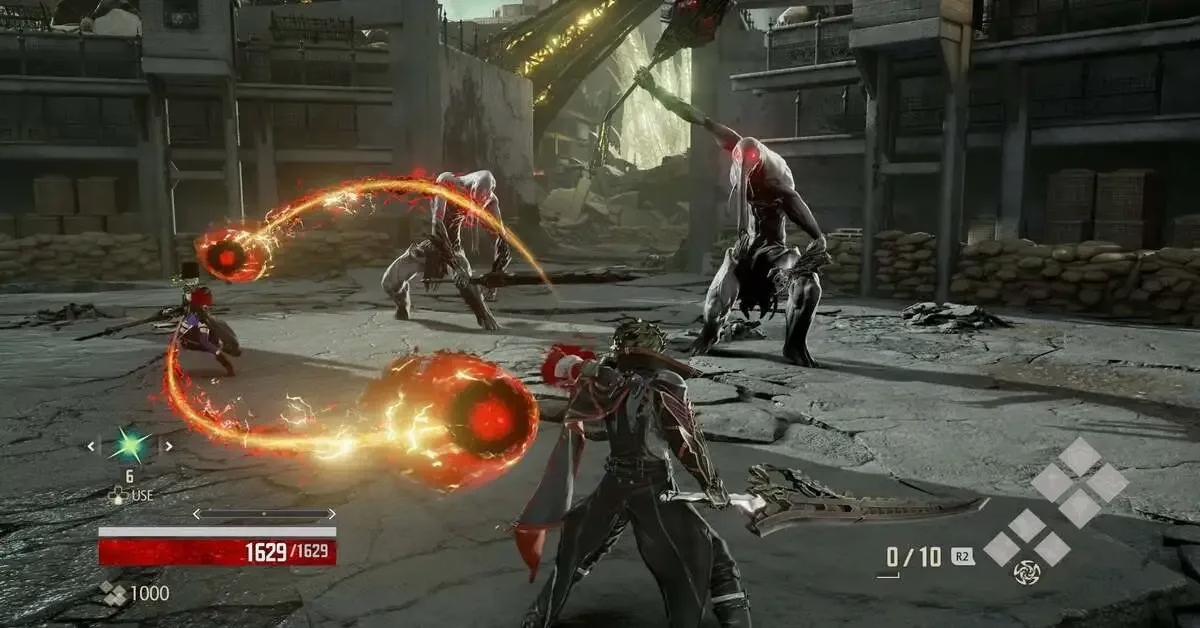
Companions in Code Vein serve multiple roles. Tactically, they create openings by distracting enemies, allowing players to heal safely or position for critical strikes. They deal respectable damage, can revive fallen players, and adapt their behavior based on their character archetype. Some focus on aggressive melee combat, others on support abilities, and still others on hybrid approaches.
More importantly, companions provide narrative weight. Each has their own tragic backstory, their own reasons for fighting, their own memories of the world before the apocalypse. Building relationships with these characters through dialogue and shared combat experiences creates emotional investment that pure challenge alone cannot achieve. When a companion falls protecting you, it feels meaningful. When they land the finishing blow on a difficult boss, victory feels shared rather than solitary.
Critics argue this system makes the game too easy, undermining the Souls-like identity. But Code Vein's designers made companionship optional—purists seeking the traditional lonely struggle can simply refuse partners and face every challenge alone. The game doesn't punish this choice; it simply offers different experiences for different player preferences. This inclusive design philosophy opened the genre to players who respected the challenge but didn't want the isolation.
A World Frozen in Tragedy
Code Vein's setting tells its own story through environmental design. The world feels suspended in the moment of catastrophe, neither fully destroyed nor capable of healing. Abandoned cities stretch across the landscape, their architecture intact but devoid of life. Streets that once bustled with activity now host only monsters and Revenants struggling to maintain their humanity.
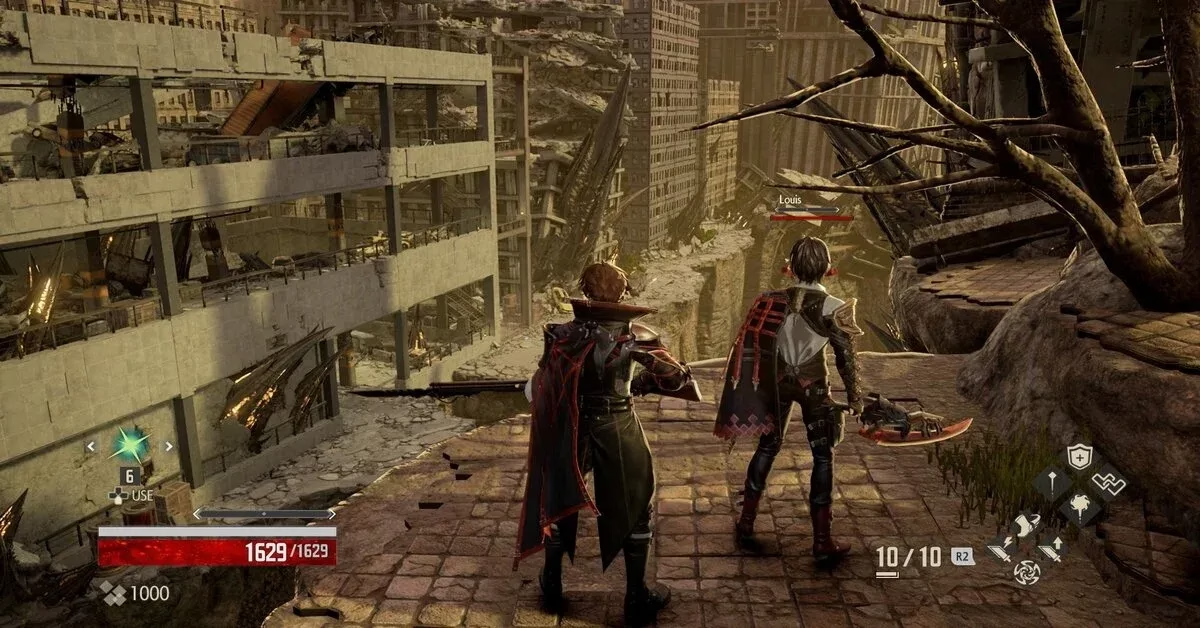
The game avoids the typical apocalypse aesthetics—no nuclear wastelands, no Mad Max-style chaos, no melodramatic destruction. Instead, it presents decay as a quiet, melancholic process. Buildings stand mostly intact but overgrown with vegetation. Personal belongings remain where they were dropped, frozen tableaus of normal life interrupted. The apocalypse here wasn't a sudden explosion but a gradual fading, which makes it somehow more haunting.
This atmosphere is reinforced by one of the game's most praised elements: its soundtrack. Where many Souls-likes favor oppressive soundscapes or bombastic orchestral pieces, Code Vein's music leans into emotional piano compositions and melancholic melodies. Boss themes combine epic intensity with tragic undertones, reminding players that the creatures they fight were once people with hopes, fears, and dreams. The music transforms combat from pure mechanical challenge into emotional experience.
Memories as Storytelling
The narrative structure of Code Vein breaks from Souls-like conventions as dramatically as its visual style. Rather than piecing together lore from cryptic item descriptions, players experience key story moments through memory sequences—fragmented recollections that show the world before, during, and after the catastrophe.
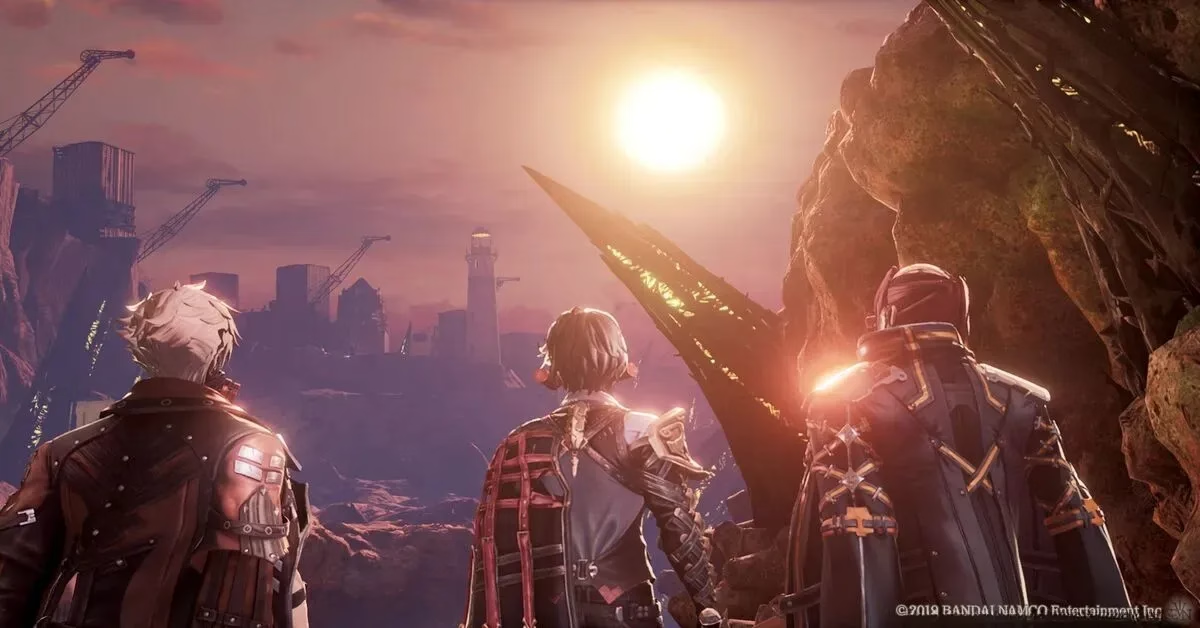
The protagonist's amnesia serves as more than a convenient plot device. It mirrors the player's own unfamiliarity with the world while exploring deeper themes of identity and humanity. What makes someone human when their memories are gone? Can personality exist without history? These philosophical questions permeate every aspect of the game.
Each companion carries their own collection of memories, accessible through relationship building and exploration. These memories rarely focus on grand historical events or world-shaking revelations. Instead, they show personal moments: a promise made to a loved one, a decision that led to unbearable guilt, a sacrifice that saved others but destroyed the self. The game understands that catastrophe is always personal before it's historical.
Recurring themes weave through these narrative threads:
-
Blood as curse and necessity: The vampiric need that sustains Revenants while threatening their humanity
-
Identity and memory: What remains of a person when their past is lost
-
Sacrifice and guilt: The weight of surviving when others didn't
-
Exploitation and responsibility: The systems that created the catastrophe and who bears accountability
-
Humanity in inhumanity: Maintaining moral compass in a world that no longer rewards morality
This approach creates a different kind of investment than traditional Souls-likes. Players don't just overcome challenges; they witness suffering, understand motivations, and emotionally connect with the world's inhabitants. Victory against a boss isn't just mechanical triumph—it's often tragic, a necessary evil against someone who became monstrous through no fault of their own.
Evolution and Continuation
By 2026, more than five years had passed since Code Vein's original release. In that time, the Souls-like genre continued its explosive growth, with new entries arriving regularly. Some innovated, many imitated, but few had captured Code Vein's specific blend of accessibility and challenge, anime aesthetics and dark themes, mechanical depth and narrative focus.
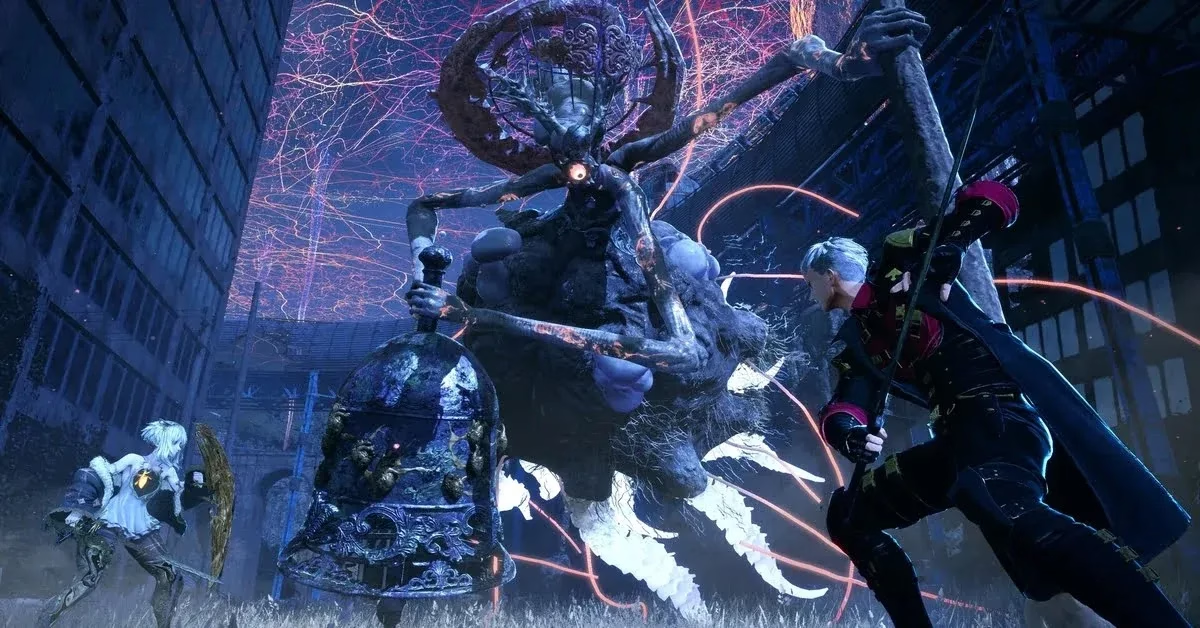
The announcement of Code Vein 2, scheduled for January 30, 2026 on PC, Xbox Series, and PlayStation 5, sparked both excitement and skepticism within the community. Would the sequel maintain what made the original special while addressing its weaknesses? Could it evolve without abandoning its identity?
Early information suggests the developers learned from both successes and criticisms. The core pillars remain intact—anime styling, accessible but challenging combat, emotional storytelling, and flexible build systems. However, several key changes promise to refine the experience.
Narrative Refinement
Code Vein 2 aims to tell a more cohesive story while maintaining the emotional resonance of the original. The fragmented memory approach returns but with clearer narrative throughlines. Characters receive more development and screen time, with the goal of deepening emotional bonds without over-explaining mysteries. The balance between showing and telling has been recalibrated based on player feedback.
The introduction of time-travel mechanics represents the sequel's boldest narrative innovation. Rather than simply observing the past through memories, players can influence events across different time periods. This concept allows exploration of consequence and causality while providing fresh gameplay opportunities. How do your actions in the past affect the present? Can the apocalypse be prevented, or are you doomed to witness its inevitability? These questions drive the new storyline.
The plot centers on conflicts between Revenants and humans, with new threats emerging in the form of Luna Rapacis and the horrors they spawn. Rather than retreading familiar ground, the sequel expands the world's mythology while maintaining thematic consistency with identity, loss, and the struggle to preserve humanity in inhuman circumstances.
Mechanical Evolution
Gameplay changes reflect a commitment to refinement rather than revolution. The Blood Code system returns but with expanded options and deeper customization. The weapon variety has increased, offering more playstyles and hybrid approaches.
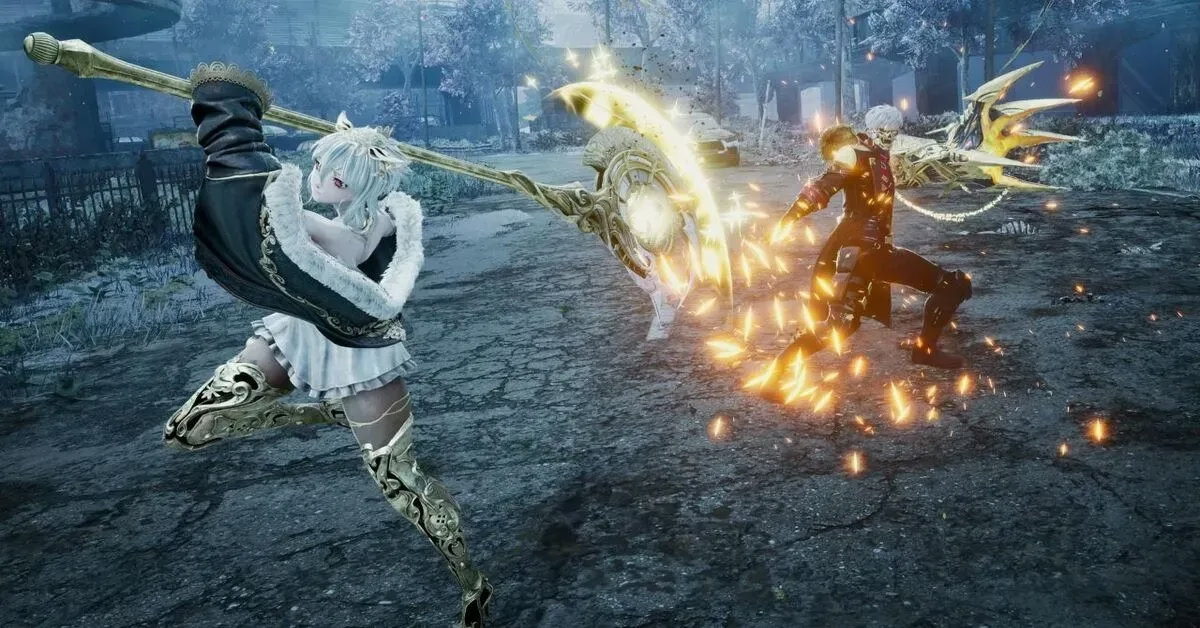
The most significant mechanical change replaces Blood Veils with a new system called Jails. Where the original game's Blood Veils functioned primarily as defensive tools for parrying and blocking, Jails embrace a more aggressive philosophy. These new mechanics provide offensive capabilities that align better with the franchise's risk-reward combat design. Players can expect new abilities, combo opportunities, and tactical options that reward aggressive play even more than the original.
Companion AI receives substantial upgrades, with expanded tactical options and more responsive behavior. The goal is making cooperation feel more dynamic and strategic rather than just having an extra body to draw aggro. Companions can now execute coordinated attacks, respond to player strategies more intelligently, and contribute meaningfully even in the most challenging encounters.
Pre-Launch Engagement
Recognizing that character creation represents a crucial part of the Code Vein experience, the developers released a Character Creator Demo before launch. This standalone application allows players to design their perfect protagonist in advance, importing the result directly into the main game. For a community that could spend hours perfecting every facial feature and accessory, this tool eliminates the dilemma of either rushing character creation to start playing or spending the game's first evening in the customization menu.
The sequel offers multiple editions catering to different fan engagement levels:
| Edition | Contents |
|---|---|
| Standard | Base game |
| Deluxe | Base game + digital artbook + soundtrack + cosmetic set |
| Collector's | Physical collectibles + all Deluxe content |
| Ultimate | All DLC + season pass + exclusive cosmetics + early access |
This tiered approach allows casual players to enjoy the core experience while giving dedicated fans opportunities to support the franchise and collect memorabilia.
The Bridge Between Genres
Code Vein's significance extends beyond its own success to its role in reshaping perceptions about what Souls-like games can be. For years, the genre was synonymous with extreme difficulty, minimal guidance, and hostile design. These weren't bugs but features—intentional choices that defined the genre's identity. Code Vein challenged that assumption.
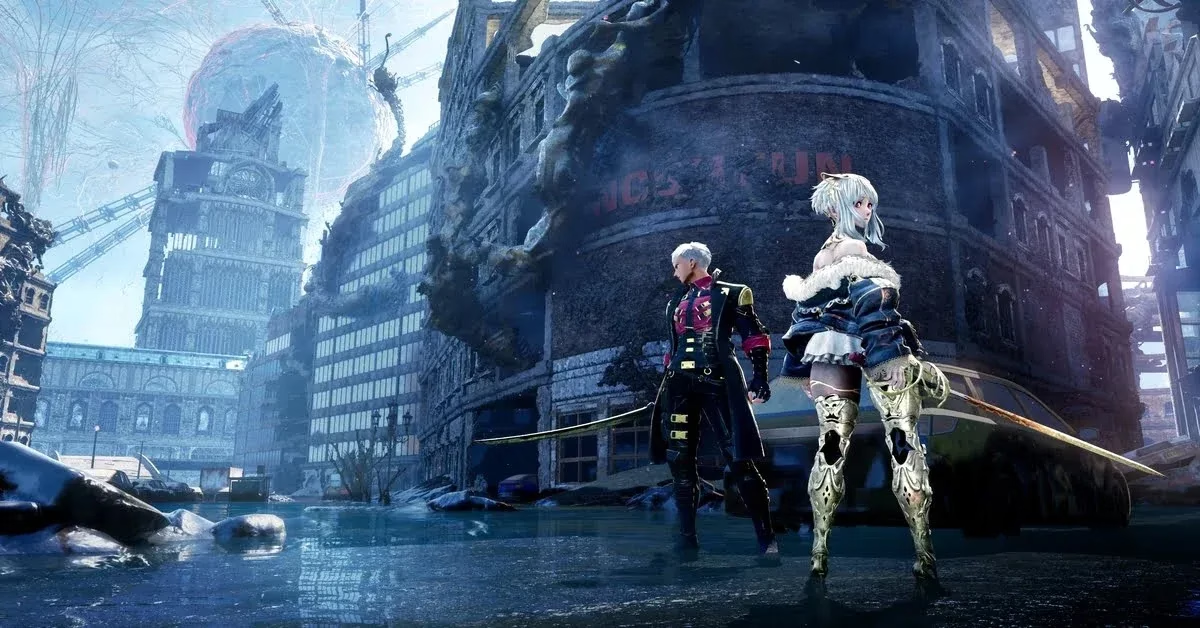
By maintaining challenge while removing arbitrary barriers to entry, Code Vein demonstrated that accessibility and difficulty aren't opposites. More checkpoints don't eliminate challenge—they reduce tedious backtracking. Companions don't trivialize encounters—they provide options for players who want them. Flexible builds don't remove strategy—they encourage experimentation. These quality-of-life features made the game more welcoming without compromising its core identity.
The anime aesthetic served a similar function. For players intimidated by grimdark fantasy settings, Code Vein offered familiar visual language. The stylized character designs, expressive animations, and manga-influenced storytelling provided entry points for audiences who might never have considered playing a Souls-like. This expanded the genre's reach without diluting what made it special.
Critical Reception and Community Response
The gaming community's response validated this approach. Steam reviews hover around 83% positive, an impressive showing for a genre known for divisive opinions. Players consistently praise specific elements:
-
Soundtrack: Nearly universally acclaimed, with many considering it among the best in gaming
-
Character customization: Extensive options that rival or exceed many dedicated character creators
-
Build variety: The flexibility to experiment without permanent consequences
-
Emotional storytelling: Rare in Souls-likes, effectively executed here
-
Atmosphere: Successfully melancholic without being oppressive
Criticisms generally focus on technical aspects rather than design philosophy. Level structure receives complaints for occasionally confusing layouts and backtracking. Enemy placement sometimes feels arbitrary rather than thoughtfully designed. Boss difficulty curves inconsistently, with some encounters trivial and others dramatically harder. These are execution issues rather than conceptual failures.
Most importantly, Code Vein cultivated a loyal fanbase. Players who bounced off Dark Souls or Bloodborne found their entry point. Anime fans discovered a Souls-like that spoke their visual language. Veterans of the genre found enough depth and challenge to remain engaged. This broad appeal created a diverse community unified by appreciation for what the game represents: proof that genres can evolve without losing identity.
The Emotional Souls-like
What truly distinguishes Code Vein from its peers isn't any single mechanic or design choice but its commitment to emotional resonance. Most Souls-likes evoke feelings of triumph through overcoming seemingly impossible odds, of determination through repeated failure, of discovery through environmental storytelling. These are powerful emotions, but they're narrow.
Code Vein adds sadness, empathy, connection, and hope to that emotional palette. The post-apocalyptic setting isn't just backdrop—it's tragedy personified. Each Revenant you meet carries the weight of everything they've lost and everyone they failed to save. The companions aren't just gameplay aids—they're people with their own pain, their own reasons to keep fighting despite having every reason to give up.
This emotional approach transforms boss fights from pure skill checks into narrative climaxes. You're not just overcoming mechanical challenges; you're putting to rest people who couldn't save themselves, ending suffering that's persisted too long, or preventing further tragedy. Victory brings relief but also sorrow for what was lost along the way.
The game's handling of humanity as a theme reinforces this emotional core. In a world where survival requires literally consuming the blood of others, where maintaining sanity means constantly fighting against monstrous urges, what does it mean to remain human? The answer isn't found in any single moment but in accumulated choices: showing compassion when it would be easier to be cruel, maintaining relationships when isolation would be safer, fighting to preserve others when self-preservation would be more logical.
Looking Forward
As Code Vein 2 approaches its January 2026 release, the franchise stands at a crucial juncture. The original proved that alternative approaches to Souls-like design could succeed both commercially and critically. The sequel must now demonstrate that success wasn't a fluke but the foundation of an enduring series.
The signs are promising. The developers clearly understand what worked about the original and what needed improvement. They're not chasing trends or abandoning what made Code Vein special. The expanded scope—new mechanics, deeper narrative integration, refined companion systems—suggests ambition tempered by understanding.
Yet challenges remain. The Souls-like market in 2026 is even more crowded than in 2019. Elden Ring's massive success raised the bar for the entire genre. Lies of P demonstrated that Souls-likes could successfully blend Western and Eastern design philosophies. Indie developers continue producing innovative entries that push boundaries. Standing out requires excellence, not just competence.
Code Vein 2's decision to embrace both new and returning players is wise but risky. Satisfy veterans by increasing complexity too much, and newcomers feel alienated. Simplify too aggressively for accessibility, and dedicated fans feel betrayed. Threading that needle while maintaining the franchise's unique identity will determine whether Code Vein becomes a lasting series or a fondly remembered experiment.
The Lasting Impact
Even if Code Vein 2 somehow fails to meet expectations, the original's legacy is secure. It proved that Souls-like games could be narratively focused, emotionally engaging, and accessible without sacrificing the core challenge that defines the genre. It demonstrated that anime aesthetics and Souls-like gameplay weren't incompatible but potentially synergistic. It showed that different doesn't mean lesser.
The franchise influenced subsequent games in subtle ways. More developers now consider companion systems, flexible build options, and quality-of-life features without fear of genre purist backlash. The success of emotional storytelling in Code Vein helped pave the way for similar approaches in other Souls-likes. The genre is richer for its existence.
For players, Code Vein represents something equally important: proof that there's room in the genre for them. Not everyone wants to spend hours learning attack patterns in complete isolation. Not everyone finds minimal storytelling compelling. Not everyone connects with dark fantasy aesthetics. Code Vein validated those preferences without demanding the genre change to accommodate them—it simply offered an alternative.
Final Reflections
Code Vein was never the loudest voice in the Souls-like conversation, never the most technically polished, never the most mechanically innovative. What it offered was something more subtle and perhaps more valuable: emotional authenticity. In a genre often accused of punishing players for the sake of punishment, Code Vein reminded us that challenge can coexist with compassion, difficulty with accessibility, bleakness with hope.
The destroyed cities and empty streets of its world mirror the emotional landscape of its characters—scarred by trauma, haunted by loss, but still standing. Still fighting. Still searching for meaning in a world that seems to have forgotten what meaning is. That struggle resonates because it's fundamentally human, regardless of the vampiric supernatural elements wrapping it.
As we await the sequel, the original stands as a melancholic alternative in a genre that rarely allows room for melancholy. It proved that Souls-like games could make players feel, not just test their reflexes. It showed that anime styling could enhance rather than diminish serious themes. It demonstrated that making games more accessible doesn't mean making them less meaningful.
Whether Code Vein becomes a major franchise or remains a cult favorite, it has already succeeded in its most important goal: proving that Souls-like games don't have to be monolithic. There's room for different approaches, different aesthetics, different philosophies. The genre is large enough to contain both the unforgiving isolation of Dark Souls and the melancholic companionship of Code Vein.
For players who found their way into the genre through this stylish, emotional, accessible entry point, Code Vein represents something beyond just another game. It's validation that their preferences matter, that games can be both challenging and welcoming, that difficulty and emotional storytelling aren't mutually exclusive. In a genre often defined by what it denies players, Code Vein chose to give: companions, flexibility, story, hope.
That generosity of spirit, combined with mechanical depth and emotional authenticity, ensures Code Vein's place not just in Souls-like history but in the larger conversation about what games can be and who they can be for. Sometimes the most radical act isn't reinventing everything—it's simply being kind while maintaining your standards. Code Vein understood that lesson, and gaming is better for it. 🎮💔🗡️
