Sailing into Legend: My Journey with Windrose's Million-Copy Triumph
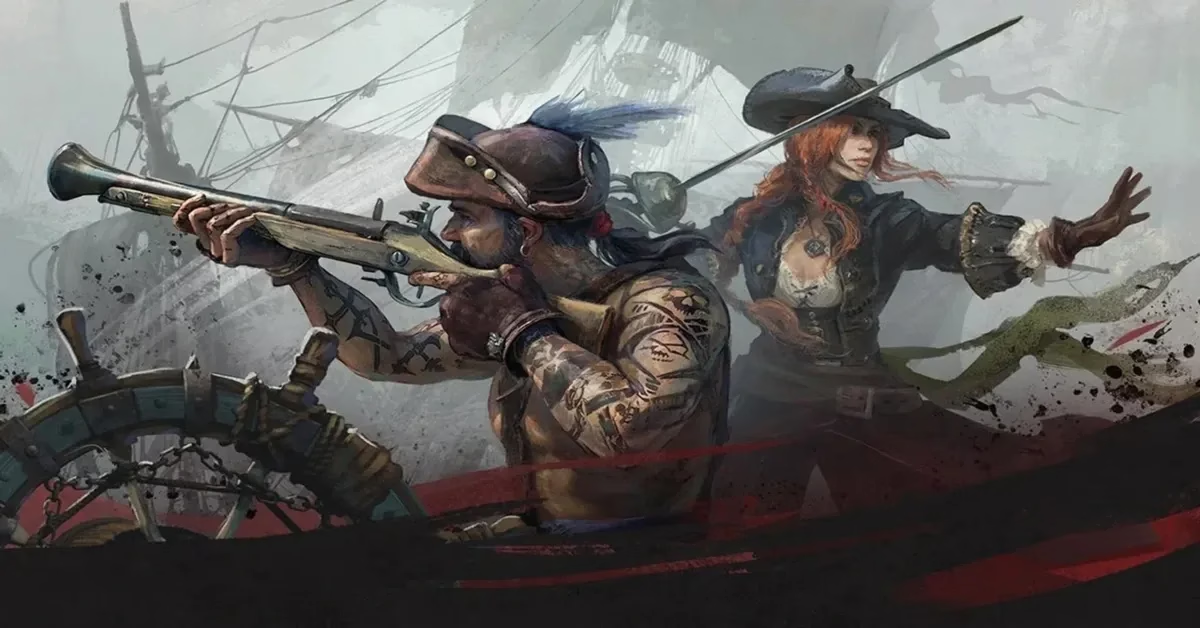
I've watched countless indie dreams sink beneath the waves of obscurity, yet here I stand, controller in hand, witnessing something extraordinary. Windrose didn't just launch—it erupted into the gaming consciousness like a cannon blast across still waters. Six days. That's all it took for this pirate survival experience to claim over one million souls, mine included, pulling us into its tempestuous embrace.
The Storm That Changed Everything 🌊
When April 14, 2026 arrived, I wasn't prepared for what would unfold. The gaming landscape had become predictable—massive budgets, familiar formulas, safe bets. Then Windrose appeared on my Steam library like a ghost ship emerging from fog, defiant and unapologetic in its ambition.
The numbers tell a story of their own: 222,134 concurrent players at peak, surpassing even Marathon's carefully orchestrated launch. I was one of those numbers, logged in at 3 AM, unable to tear myself away from the helm of my weathered ketch as it cut through procedurally generated waves.
A World Built on Contradictions
What draws me back, night after night, isn't just one element—it's how Windrose weaves seemingly incompatible threads into something cohesive. Traditional crafting-survival mechanics dance with "soulslite" combat precision. I've learned to read enemy attack patterns as carefully as I read wind directions. One moment I'm managing supply chains and NPC workers at my island base; the next, I'm locked in a desperate parry-dodge rhythm against a rival captain, my stamina bar as crucial as my health.
The naval simulation runs deeper than I expected from an Early Access title. I've captained:
-
Nimble ketches that slice through narrow channels
-
Sturdy brigantines that balance speed with firepower
-
Massive frigates that turn like drunken leviathans but command respect through sheer presence
Each vessel demands different thinking, different crew arrangements, different tactical approaches. I've felt the satisfying thud of broadside cannons finding their mark, watched masts splinter under concentrated fire, wrestled with wind mechanics that actually matter.
The Poetry of Procedural Worlds 📜
Windrose promised me an alternative Age of Piracy, and it delivered something more nuanced than Hollywood's golden-toothed caricatures. The procedurally generated biomes shift between playthroughs, but the 100+ hand-crafted points of interest remain as narrative anchors—familiar lighthouses in ever-changing seas.
| Feature | My Experience |
|---|---|
| Main Campaign Length | 67 hours (still discovering secrets) |
| Procedural Islands | 30 available, each feels distinct |
| Combat Deaths | Too many to count (still learning) |
| Ships Lost | 5 (RIP Crimson Regret) |
I've spent somewhere between 50-70 hours in the main story campaign alone, though calling it "just Early Access" feels disingenuous. Many finished products I've reviewed offered less substance. The seamless transitions between land exploration and naval combat create a rhythm that matches the sea itself—calm moments of resource gathering giving way to explosive encounters without warning.
The Economics of Success 💰
This million-copy milestone isn't just a vanity metric—it's reshaped the game's future trajectory before my eyes. The developers accelerated their timeline, channeling capital directly into server infrastructure and technical refinements. I've noticed the difference: smoother connections, fewer desync issues during cooperative play, faster load times between biomes.
The planned naval combat expansions now feel inevitable rather than aspirational. Biome updates will receive more frequent patches. As someone who's witnessed too many Early Access titles languish in development purgatory, this financial validation matters. It transforms potential into momentum.
Why This Works When Others Fail 🎮
I've analyzed this from every angle—as a player, as someone who studies game economics, as a person who simply loves well-crafted experiences. Windrose succeeds because it respects contradictions:
Accessible yet Deep
I could learn basic sailing mechanics within an hour, but 60+ hours later, I'm still discovering combat nuances and optimization strategies.
Procedural yet Authored
The world changes, but meaningful stories persist through those hand-crafted locations that ground each voyage in purpose.
Social yet Solitary
Cooperative PvE allows shared adventures without the toxicity of competitive PvP, though I've found equal satisfaction in solo expeditions.
The base building with NPC recruitment transformed my relationship with the game world. Instead of simply extracting resources, I'm creating something that persists—a functioning economy, automated production chains, a home port that feels earned rather than granted. My NPCs aren't just decorative; they're the crew that keeps operations running while I'm chasing horizon-bound mysteries.
The Soulslite Difference ⚔️
That "soulslite" combat designation initially made me skeptical—another marketing term, I assumed. But the precision demanded on foot combat genuinely mirrors From Software's influence while maintaining its own identity. I've learned boss patterns, respected stamina management, accepted death as teacher rather than failure.
Yet it's not as punishing as true souls-likes. The game wants me to succeed, to feel competent, to experience those moments of hard-won victory without grinding my spirit into frustration. It's the difference between challenging and cruel—a line many developers misjudge.
Looking Forward Through Salt-Stained Glass 🔮
We're in 2026 now, and Windrose represents something I've craved: a robust investment that respects my time. The current trajectory suggests rapid updates will maintain momentum rather than let it dissipate like so many Early Access promises before.
The cooperative PvE genre needed this—a cornerstone experience that proves the model's viability without compromise. I've brought friends into these waters, watched them transform from hesitant sailors into confident captains. The game creates stories we actually want to share, emergent narratives born from systems interacting in unexpected ways.
The Technical Foundation 🛠️
What impresses me most isn't the initial success—launch hype is easy. It's the developer response: prioritizing infrastructure over flashy content additions, ensuring the foundation can support weight before adding more floors. Those server improvements I mentioned earlier? That's wisdom many studios learn too late, if ever.
The influx of capital from these million sales could have gone anywhere. Instead, it's reinforcing what already works while carefully expanding what could work better. The planned naval combat expansions will build on proven mechanics rather than introducing untested systems wholesale.
The Verdict from the Helm 🏴☠️
I've captained vessels through storms that blacked out my screen, managed bases that sprawled across entire islands, died to bosses whose patterns I'm still learning. Windrose isn't perfect—it's Early Access, after all, with the rough edges that entails. But it's earned my trust in ways that finished titles often fail to achieve.
For fans of the survival-crafting genre, this stands as more than a recommendation—it's a benchmark. The game that demonstrated what's possible when developers understand their core systems deeply enough to blend them seamlessly. The success story that might inspire the next generation of indie studios to take bigger swings.
I'll be here, in these procedurally generated waters, when the next update drops. My frigate needs repairs, my base needs expansion, and somewhere beyond that next horizon waits another hand-crafted mystery worth discovering. Windrose sold a million copies because it deserves them—and because, sometimes, in this vast ocean of gaming options, the right current catches at exactly the right moment. 🌅
Current playtime: 73 hours and counting. The sea calls, and I must answer.
